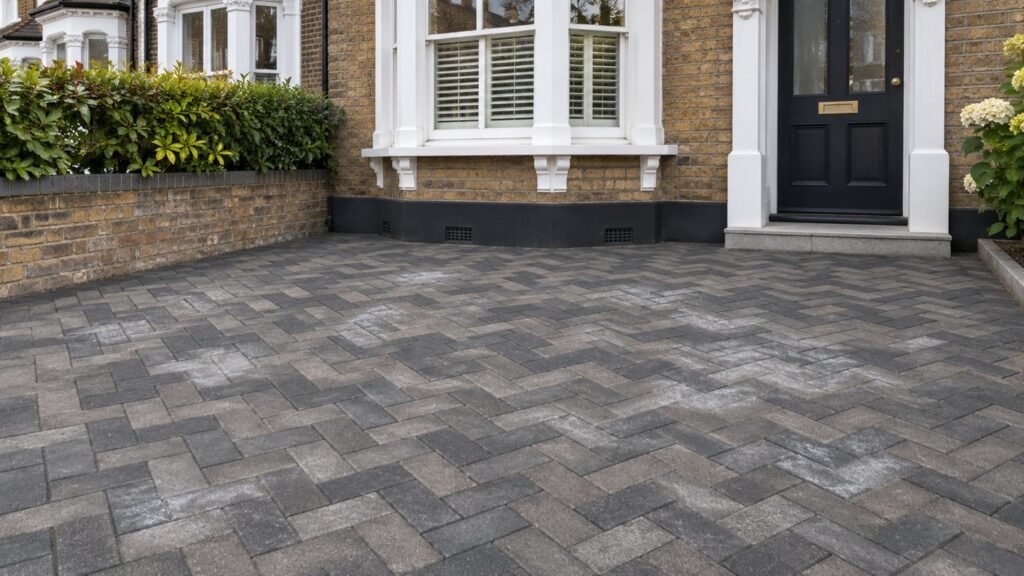
White marks on block paving after pressure washing can come from mineral deposits, leftover cleaner or uneven cleaning. The easiest first check is to let the paving dry completely. A chalky deposit that brushes off points towards surface residue or efflorescence. Pale stripes that follow the path of the lance, especially where the surface feels rougher, need a closer look before you wash again.
What do the white marks look like?
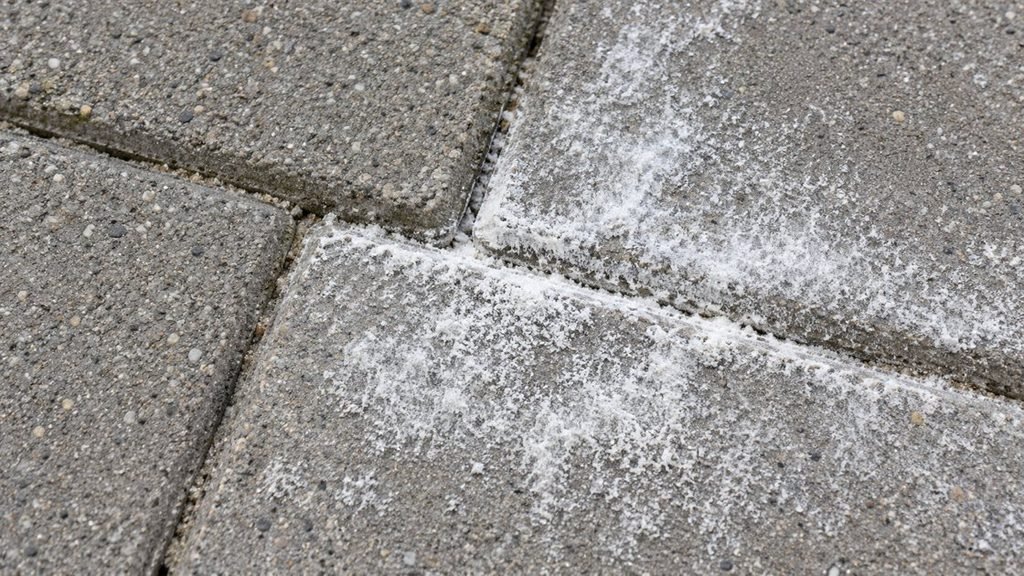
- Powdery patches on individual blocks: On concrete paving, this may be efflorescence. Moisture carries soluble salts to the surface, where they leave a pale deposit as the paving dries. It can happen on paving that has never been pressure washed.
- A pale film where the rinse water dried: If you used a cleaning product, residue is one possibility. Check the product label for the recommended rinse and check the paving manufacturer’s care instructions.
- Straight lines, arcs or overlapping stripes: Follow the pattern. If it matches the passes of the lance, some areas may simply be cleaner than others. A change in texture or exposed aggregate can point to surface wear.
- A cloudy patch on previously sealed paving: Check what sealer was used. Its appearance and treatment depend on the coating, so ask the installer or manufacturer before applying another product.
Is it efflorescence or pressure washer damage?
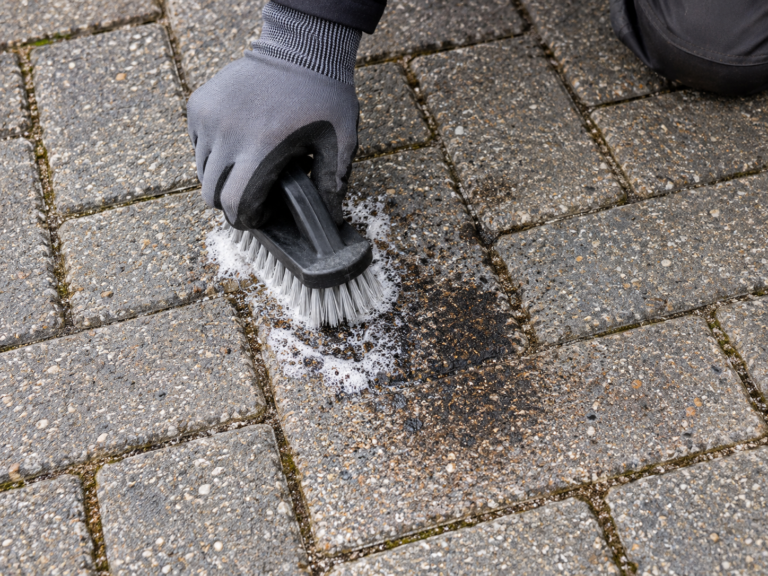
Look at the paving when it is dry in daylight. Brush a small patch with a dry nylon brush and compare it with an unaffected block. If a little white powder lifts and the underlying texture looks the same, that is consistent with a deposit. If the pale area follows the spray pattern and the surface feels rougher, stop pressure washing that patch. A visual check gives you clues, but it cannot identify every stain.
On concrete products, Marshalls’ technical guidance explains that efflorescence can look like fading and generally weathers away. Persistent white patches around a low spot or along the same joints are worth photographing after rain and again when dry. Those photos help you see whether standing water and the marks are recurring in the same place.
What should you do next?
- Identify the paving. Concrete blocks, clay pavers and natural stone can need different care. Check the installer’s paperwork or product information before choosing a cleaner.
- Start with a small area. Try a dry brush on loose residue. If you suspect leftover cleaner, follow its rinse instructions and let the test patch dry fully before judging the result.
- Check the joints. If sand has washed out, use our guide to re-sanding block paving after pressure washing. Replacing jointing sand addresses the joints. The white patches need their own diagnosis.
- Pause before using a stronger treatment. Avoid trying vinegar, brick acid or a stronger jet on an unidentified surface. Ask the manufacturer or a paving specialist about a compatible treatment if the marks persist.
Can you wash or seal the paving again?
Find the cause first. Another pass may change the appearance of unevenly cleaned paving, but it will not restore material that has already worn away. If you plan to seal the paving, identify the marks and check the sealer manufacturer’s preparation and drying instructions before proceeding.
Frequently asked questions
Why are the white marks more obvious when the driveway dries?
Moisture can temporarily darken the blocks and make a pale deposit harder to see. Once the surface is dry, the contrast returns. Compare two dry areas in similar light before deciding whether a treatment has worked.
Can white patches come back after brushing?
Yes, if moisture is still carrying salts to the surface. If the marks repeatedly return in the same places, note where water sits and ask the paving supplier for advice.
Does the same advice apply to a patio?
The first checks are similar, but confirm the paving material and whether it has been sealed. For help assessing the surface, see our patio cleaning service.
Get help with white marks on your driveway
If the marks keep coming back or the blocks feel rough after washing, send Thames Face Clean a close-up of the dry surface, a wider photo showing the pattern and your postcode. We cover West and South West London. Explore our driveway cleaning service or contact us for a quote.