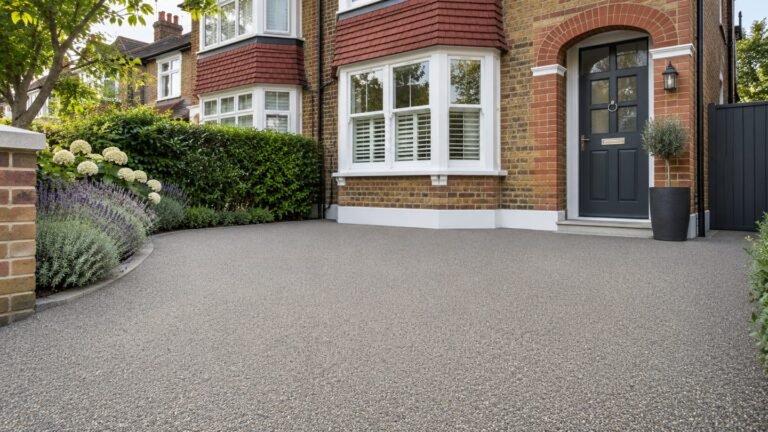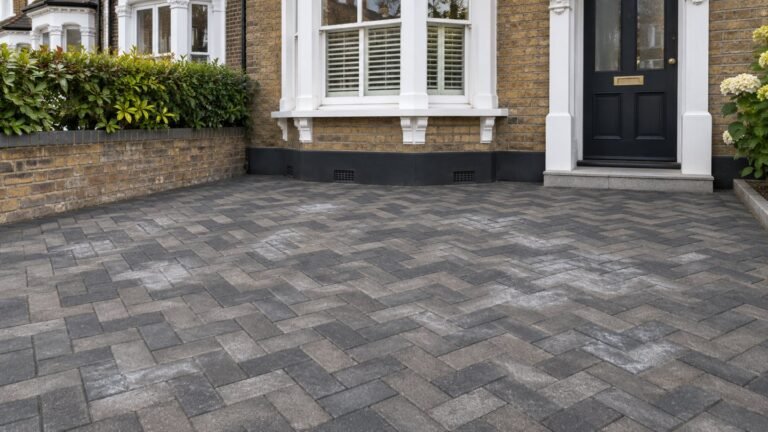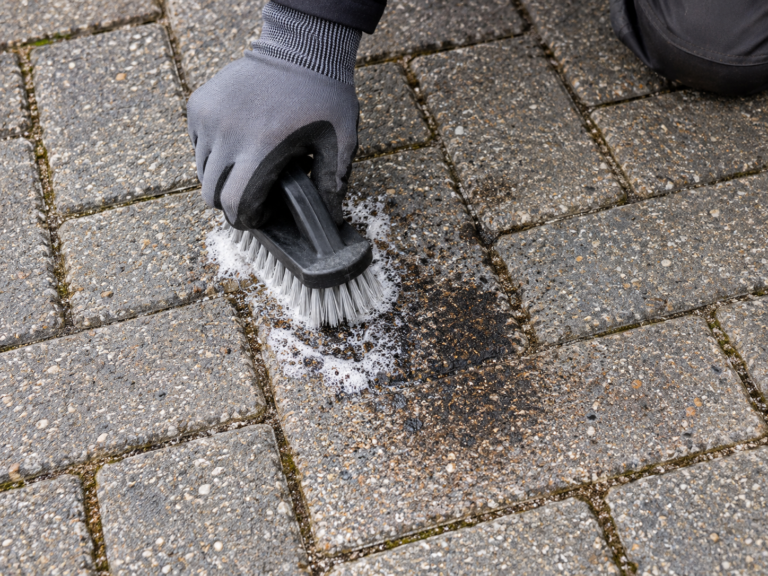
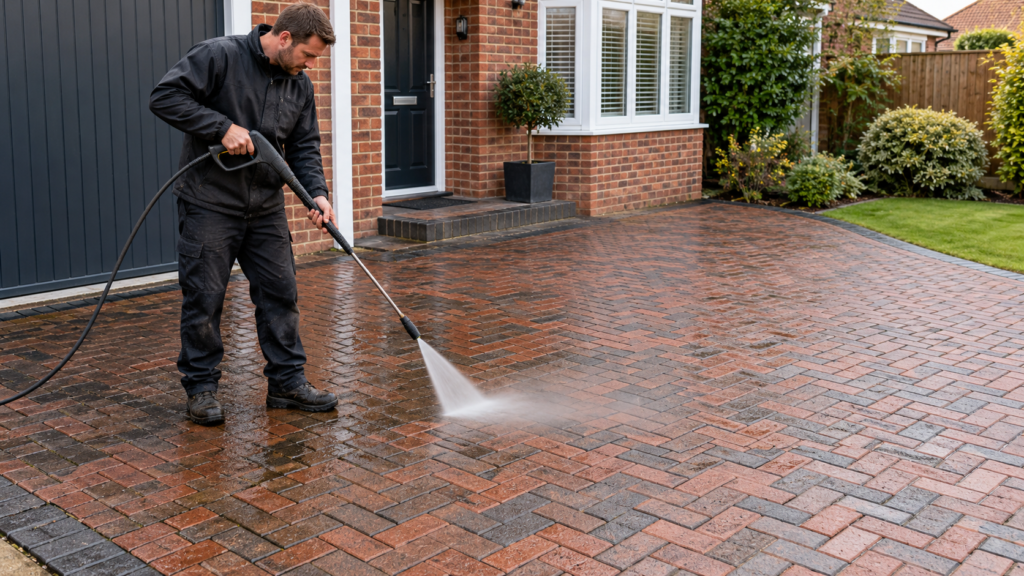
The driveway looks cleaner, the original colours are showing again, and the weeds have gone. Then you notice the narrow gaps between the blocks: some look deeper than before, with sand collected near the drain.
Freshly washed block paving can reveal more than its original colour: it may also expose joints where sand has been washed away. Whether those gaps need topping up depends on the paving system and how much jointing material remains. In this guide, Thames Face Clean explains how to assess your paving after cleaning, choose the appropriate replacement material and recognise problems that re-sanding alone cannot fix.
Has the cleaning damaged the paving, or is replacing that sand simply part of finishing the job?
Conventional sand-jointed block paving needs re-sanding wherever pressure washing has removed jointing sand. Allow the paving and joints to dry sufficiently, then replenish them with the material specified for the paving system. Permeable paving and surfaces with specialist jointing products require a different approach. Manufacturers recommend replacing sand displaced during cleaning to maintain the performance of the paving. Thomas Armstrong (Concrete Blocks) Ltd
Before opening a bag of sand, establish what your driveway is made from, how its joints work and whether the surface needs maintenance or an actual repair.
What the Sand Between Paving Blocks Actually Does
On conventional flexible block paving, the narrow joints contain material that helps neighbouring blocks work together under load. Properly filled joints contribute to the interlock that resists movement when people walk across the surface or vehicles turn on it.
This jointing material is different from the bedding layer beneath the blocks. Sweeping sand across the top replenishes the joints; it does not rebuild the supporting layers below.
That distinction matters if the driveway has become uneven. A low joint may need topping up, but a sunken wheel track or rocking block can indicate a problem that surface sanding will not resolve.
Think of re-sanding as maintaining an otherwise sound pavement. It should not be used to disguise movement, failed edges or settlement.
First, Identify Your Paving System
Similar-looking driveways can require different jointing materials. Choosing by appearance alone is unreliable.
| Paving system | What to establish after cleaning |
|---|---|
| Conventional concrete or clay block paving with sand-filled joints | Whether sand has been displaced and which jointing sand the manufacturer specifies |
| Permeable block paving | Which open-graded jointing aggregate the system requires |
| Paving with a hardened or polymeric jointing product | Whether the product remains sound and how its manufacturer specifies repairs |
| Mortar-jointed paving or setts | Whether joints need appropriate repointing rather than loose sand |
| Paving with an existing sealer | Whether the proposed cleaning, jointing material and any further treatment are compatible |
The Important Exception: Permeable Block Paving
Permeable block paving is designed to let water pass through its joints into a specially constructed drainage build-up.
These systems normally use specified open-graded aggregate rather than conventional fine jointing sand. Adding the wrong material can obstruct the drainage route. Marshalls specifically warns against depositing sand and other loose fine material on its Priora permeable surface. Marshalls
If your installation paperwork describes the driveway as permeable or part of a sustainable drainage system, check the product specification before replenishing its joints.
How to Tell Whether Re-Sanding Is Necessary
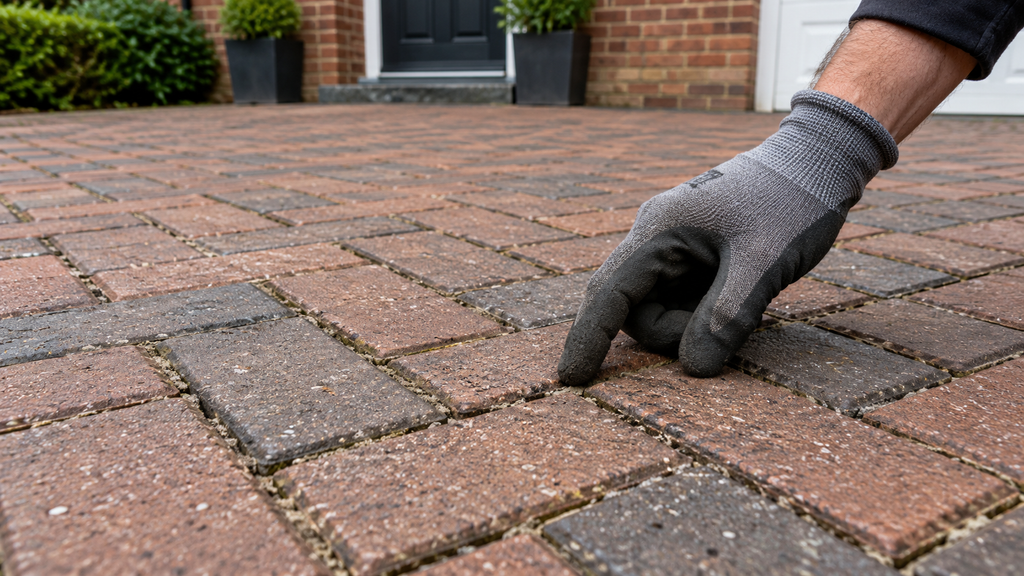
Inspect the driveway once the wash water and loose debris have cleared. Look across several areas, including wheel tracks, edges, corners and sections near drainage channels.
Signs that warrant attention include:
- Jointing material visibly below the specified finished level.
- Empty sections where sand was previously present.
- Uneven joint filling across an otherwise sound surface.
- Sand washed out onto neighbouring paving or towards a drain.
The correct finished level depends on the block profile and manufacturer’s guidance. A chamfered edge can make a properly filled joint appear slightly recessed, so do not assume that every visible groove needs filling to the very top.
If the joints remain correctly filled after a gentle clean, adding more sand simply because the surface has been washed may be unnecessary. The inspection should determine the work required.
Movement changes the diagnosis. Blocks that rock, spread apart or sit noticeably lower than their neighbours should be assessed before the job is treated as a routine top-up.
Why Pressure Washing Removes Jointing Sand
Water directed into a joint can dislodge its contents along with dirt and organic growth. The amount lost depends on the existing joint condition, equipment, nozzle position and cleaning technique.
A concentrated jet held close to the surface can be particularly disruptive. Cleaning should follow the paving manufacturer’s guidance and use an appropriate method for the material and its condition. Marshalls advises that high-pressure washing is generally unnecessary for routine maintenance and recommends controlled washing pressure. Marshalls
Some sand loss does not automatically mean the driveway has been ruined. It does mean that the joints need checking and any displaced material needs addressing.
For a planned clean, ask whether this finishing stage is included in the quotation. Our driveway cleaning services cover driveway cleaning, with re-sanding available where appropriate to the surface.
When Can You Re-Sand After Pressure Washing?
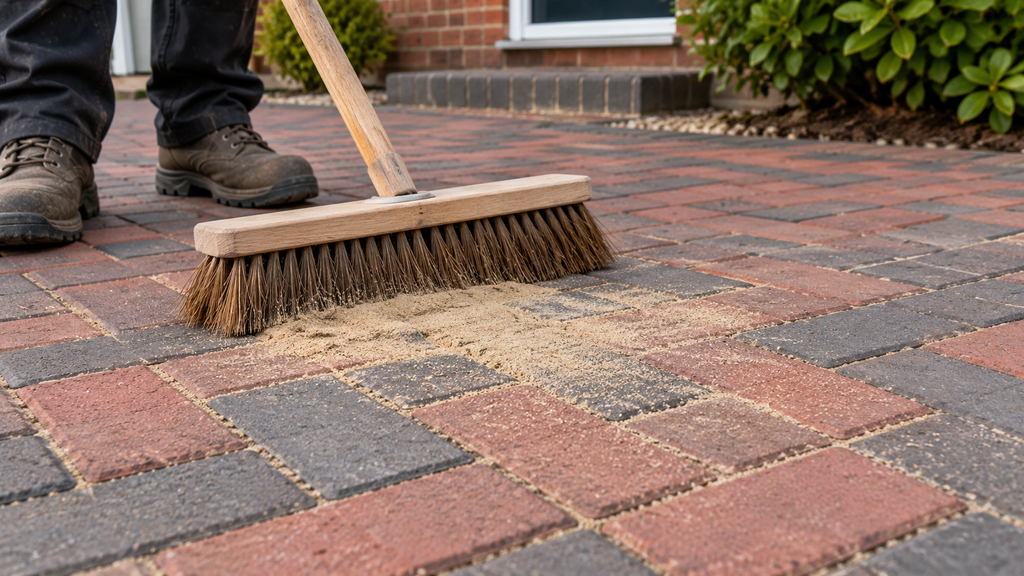
For conventional kiln-dried jointing sand, work in dry conditions and allow the paving to dry sufficiently before application. Moisture makes the sand clump, preventing it from flowing freely into narrow joints. Bradstone’s re-sanding guidance identifies dry paving and dry working conditions as essential to effective filling. bradstone.com
Avoid treating a fixed number of hours as a guarantee. A driveway exposed to sunshine and moving air can dry differently from a shaded passage beside a wall.
Before starting, check:
- Whether moisture remains in the joints.
- Whether shaded sections are still damp.
- Whether the sand stays loose as it is brushed across the surface.
- Whether the forecast provides a suitable working window.
If the sand forms damp streaks or small clumps, stop and allow more drying time.
A return visit can therefore be a sensible part of the service. Washing and re-sanding do not always belong on the same day.
Which Sand Should You Use?
For many conventional block-paving installations, the appropriate product is purpose-made kiln-dried jointing sand. Its grading and dry condition help it enter the narrow spaces between the blocks. Marshalls supplies finely graded kiln-dried sand specifically for this purpose. Marshalls
Check suitability for the actual paving rather than buying any bag labelled “sand”.
Can You Use Building Sand or Sharp Sand?
Do not substitute these automatically.
Bedding materials and jointing materials serve different purposes. A product suitable beneath paving is not necessarily suitable for filling its narrow joints.
Choose the jointing material required by the paving manufacturer, taking account of joint width, the existing installation and any specialist treatment.
Is Polymeric Sand a Better Upgrade?
A polymeric product is not a universal replacement for loose jointing sand.
Compatibility can depend on the paving material, joint dimensions, drainage and installation method. Products also have their own preparation, activation and curing requirements.
If you are considering a change of jointing system, assess it as a separate specification decision. Avoid simply brushing a new product over old material and assuming the result will perform as intended.
What a Proper Re-Sanding Job Involves
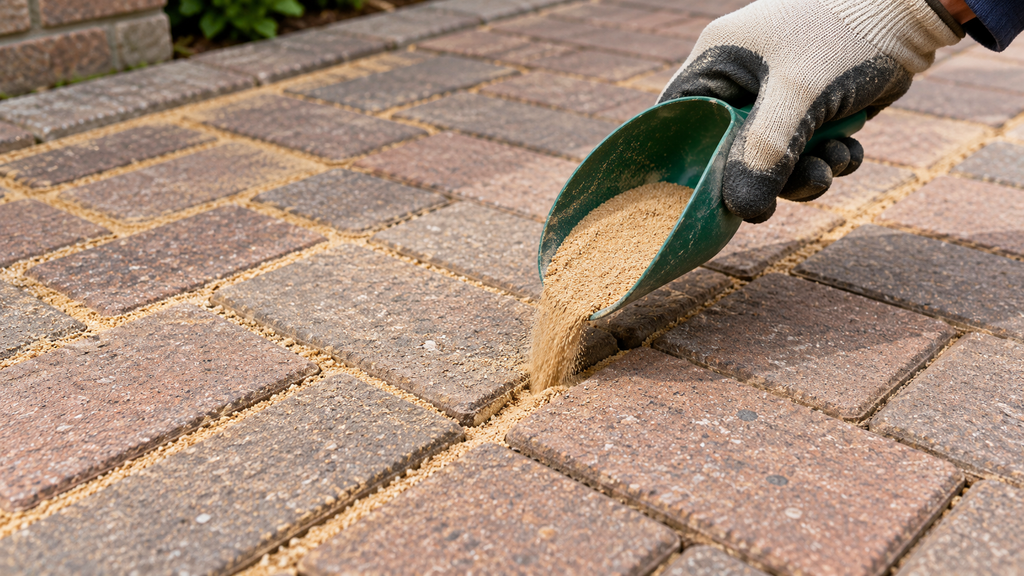
Once the paving system has been identified and the surface is ready, the objective is to refill the joints consistently.
1. Check the Surface Before Adding Material
Remove remaining loose dirt, vegetation and cleaning residue. Identify damaged blocks, displaced edging or areas that require repair.
Do not deliberately excavate sound joints just to make the whole driveway look equally empty.
2. Keep the Jointing Sand Dry
Store the material under cover and open it when the surface is ready. Sand that was kiln-dried during manufacture can still become damp during poor storage or application.
3. Work the Sand into the Joints
Spread manageable quantities and brush across the paving in different directions. Repeated passes help reach joints that a single sweep may miss.
A thin covering on the block faces is not evidence that the gaps below have been filled.
4. Follow the Appropriate Consolidation Method
The required method depends on the paving system and the extent of the work. Where mechanical compaction is specified, suitable equipment and any required protective measures must be used.
A contractor should distinguish a minor maintenance top-up from work involving substantial joint loss or relaid blocks.
5. Top Up and Remove Surplus
Check the joint levels again after consolidation and replenish where required. Finish by sweeping excess material off the paving and keeping drainage channels clear.
Bradstone’s guidance similarly describes filling, settling, topping up and removing surplus material as separate parts of the process. bradstone.com
How Much Jointing Sand Will You Need?
There is no dependable “one bag per driveway” rule.
Consumption changes with:
- The paved area.
- Block size and shape.
- Joint width.
- The depth of material missing.
- Whether the job is a light top-up or more extensive replenishment.
Smaller blocks create more joint length over the same area than larger units. Deeper empty joints also need more material than a shallow surface top-up.
Use the product’s coverage information alongside an inspection of the driveway. For an existing surface, a measured trial area can help refine the estimate.
When comparing quotations, look for the material and scope of work rather than judging value by the number of bags mentioned.
Will Re-Sanding Stop Weeds Coming Back?
Re-sanding should not be sold as permanent weed prevention.
Seeds can settle into dirt and organic debris that collect on the surface and within joints. Marshalls’ maintenance guidance explains that weeds commonly colonise material in the joints or accumulated detritus. media.marshalls.co.uk
Keeping the paving swept and dealing with new growth early remains useful after the joints have been replenished.
Avoid assuming that every weed has grown up through the entire driveway construction. Equally, adding clean sand over established growth does not remove the underlying vegetation.
Do You Have to Seal Block Paving Afterwards?
Re-sanding and sealing are separate decisions.
The need to replace lost jointing material does not automatically establish a need for sealer. Any proposed treatment should be compatible with the paving, existing coatings and jointing system.
Before agreeing to sealing, establish:
- What benefit the proposed product is intended to provide.
- Whether it changes the colour or sheen.
- What preparation and drying conditions it requires.
- How future maintenance will be carried out.
For a permeable installation, any treatment must preserve the system’s intended drainage performance. Check the paving and treatment manufacturers’ requirements before proceeding.
When More Sand Will Not Solve the Problem
Re-sanding is unlikely to be the complete answer if you notice:
- Persistent rocking underfoot.
- Deep depressions or wheel ruts.
- Blocks spreading towards an unsupported edge.
- Repeated loss of material from the same location.
- Significant pooling caused by an uneven surface.
For example, if one wheel track has sunk, filling the joints may improve its appearance without restoring the level of the blocks.
Similarly, if jointing material repeatedly disappears beside a drainage channel, investigate the cause before continuing to replace it.
These conditions call for an assessment of the paving construction, restraint or drainage. Cleaning can reveal an existing problem that was previously concealed by dirt.
Does a Block-Paved Patio Need the Same Aftercare?
A conventional sand-jointed block-paved patio also needs its joints checked after washing.
However, a patio laid with larger slabs and hardened pointing may require a different repair material. The fact that both surfaces are outdoors does not make their jointing systems interchangeable.
If your garden includes several surface types, our professional patio cleaning services provide a relevant starting point for arranging cleaning suited to the paving.
Planning Cleaning and Re-Sanding in West London
For a driveway in Twickenham, Richmond, Teddington or nearby areas, plan the work around access and a suitable drying window.
Before booking, confirm whether the price includes joint inspection, the specified replacement material, any return visit and final clean-up. Repairs and optional sealing should be clearly identified.
Thames Face Clean provides exterior cleaning across West and South West London. Send photographs showing the whole paved area, a close view of the joints and any uneven sections to request a free, no-obligation quotation. Construction Company
Frequently Asked Questions
Do you always need to re-sand block paving after pressure washing?
You need to replenish conventional sand-filled joints where cleaning has removed material. If the joints remain correctly filled, additional sanding may not be required. Permeable and specialist jointing systems need their specified materials.
Can you re-sand block paving on the same day?
Possibly, if the paving and joints have dried sufficiently and conditions suit the material. Do not prioritise finishing on the same day over achieving properly filled joints.
What happens if you put kiln-dried sand on wet paving?
It can absorb moisture and clump rather than flowing into the joints. This can leave a surface that looks sanded while gaps remain below.
Should you wash kiln-dried sand into the joints?
Follow the product instructions. Conventional dry brush-in jointing sand should not be treated like a specialist product that requires water activation. Adding water can disrupt the filling process or move loose material.
Can you drive over paving before re-sanding?
Where joints have lost significant material, minimise vehicle use until they have been restored and the surface assessed as ready. If a specialist product is used, observe its stated return-to-service requirements.
Will re-sanding repair loose blocks?
It may help restore joint filling on an otherwise sound surface, but rocking or displaced blocks can need repairs to the bedding, edges or supporting construction.
How often should block paving be re-sanded?
Inspect it after cleaning and during routine maintenance. Replenish joints when their condition requires it rather than relying on a fixed annual schedule.
Do you need kiln-dried sand for permeable paving?
Usually, permeable block paving requires a specified open-graded jointing aggregate. Confirm the installation specification before adding material; conventional fine sand can interfere with drainage.