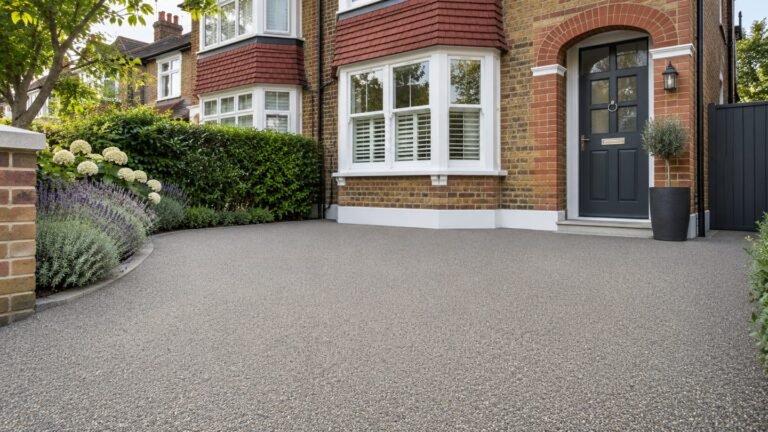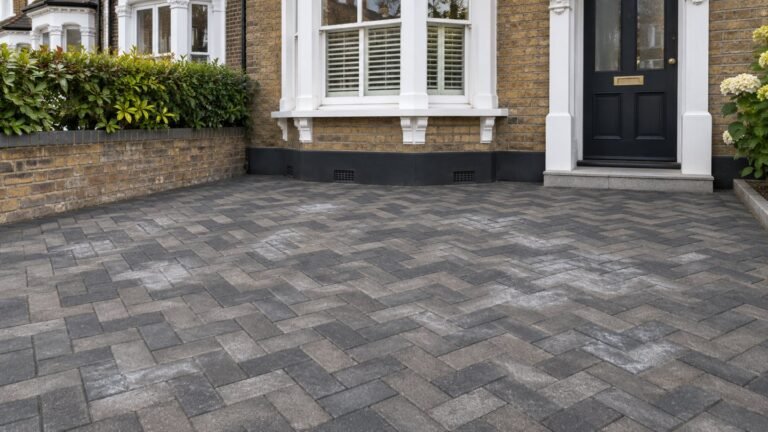
An oil stain beneath your parked car can quickly spoil the appearance of an otherwise tidy driveway. The best way to treat it depends on what the driveway is made from, how long the oil has been there and whether the surface has already been damaged. At Thames Face Clean, driveway cleaning begins with assessing the material and its condition, because a treatment suitable for concrete may be inappropriate for tarmac, resin or natural stone.
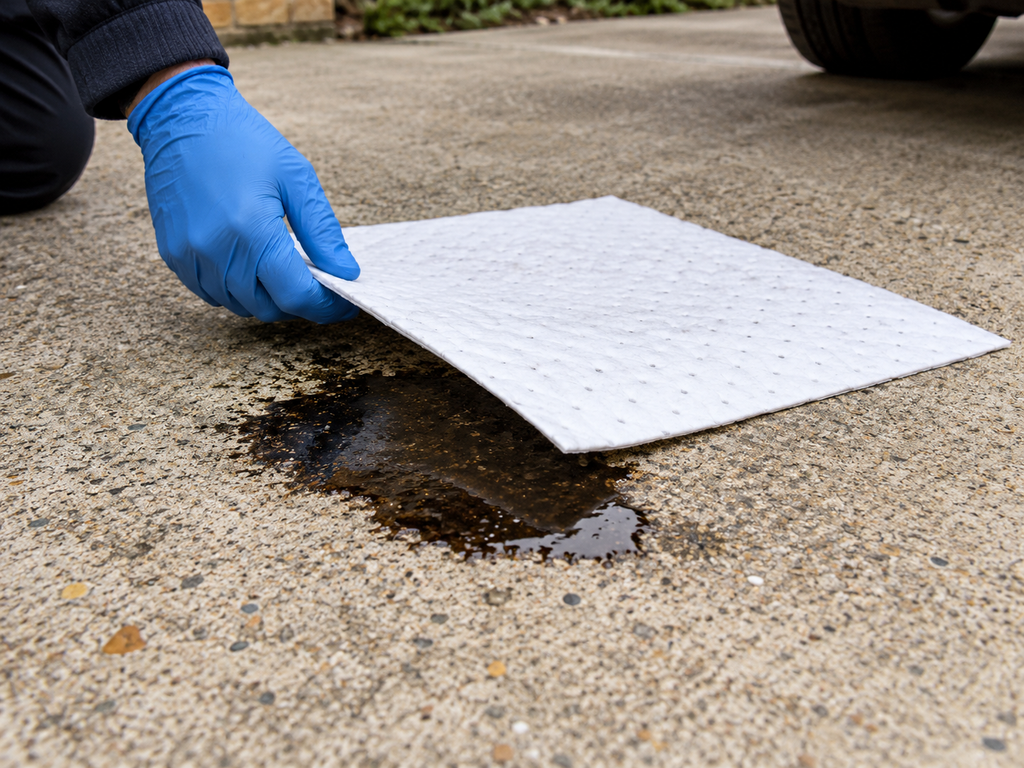
For a small, fresh engine-oil spill, the first priority is to absorb the liquid before it spreads or soaks further into the surface. Any remaining mark can then be treated with a cleaner approved for that particular driveway material.
Older stains are more complicated. Oil can penetrate porous paving, and repeated leaks may leave a dark patch that improves with cleaning without disappearing completely.
This guide explains the practical options for different surfaces, which household methods deserve caution, and when professional assessment is worthwhile.
What Is the Best Way to Remove Oil Stains from a Driveway?
For a small spill on a sound surface, the usual approach is:
- Stop the source of the leak.
- Absorb standing oil without spreading it.
- Identify the driveway material and any existing sealer.
- Test a compatible oil-stain treatment on an inconspicuous area.
- Apply and work the product according to its instructions.
- Collect contaminated residue and manage any rinse water.
- Allow the surface to dry before judging the result.
Do not start by blasting the oil with a pressure washer. This can spread contamination across a larger area and create oily runoff without removing the oil held within the surface.
If the affected area is soft, crumbling or visibly deteriorating, it needs assessment before further cleaning.
Why Are Driveway Oil Stains Difficult to Remove?
Oil does not behave like loose dust or mud.
On porous materials such as unsealed concrete and some paving stones, it can travel below the visible surface. Removing the oily film on top may therefore leave a darker mark underneath.
Several factors affect the result:
- Time: A recent spill is generally easier to address than an old stain.
- Porosity: More absorbent surfaces allow oil to penetrate.
- Repeated leakage: Frequent drips can keep replenishing the contamination.
- Previous treatments: Unsuitable chemicals may alter the surface or sealer.
- Material damage: Some marks involve deterioration as well as staining.
The aim is to remove as much contamination as the surface safely allows. Increasing chemical strength or water pressure indefinitely can cause more damage than the original stain.
Fresh Oil Spill or Old Stain: Which Are You Dealing With?
A fresh spill
Fresh oil may look glossy, feel wet or transfer readily onto an absorbent pad.
At this stage, removing the liquid is more useful than immediately scrubbing the driveway. Rubbing can spread it into nearby pores and joints.
Use a suitable oil-absorbent product or pads, following the supplier’s instructions. Replace saturated material as necessary and collect it for appropriate disposal.
An established stain
An older stain may look dry but remain noticeably darker than the surrounding driveway.
Adding absorbent granules alone is unlikely to remove oil that has already penetrated the material. A compatible degreaser, specialist stain treatment or professional approach may be needed.
A stain with surface damage
Softened tarmac, loose aggregate, peeling sealer or a deteriorating finish changes the problem.
Cleaning may remove some contamination, but it cannot restore a damaged binder or replace missing material. Repair may be necessary.
Oil-Stain Removal Options by Driveway Surface
| Driveway surface | Suitable starting point | Main consideration |
|---|---|---|
| Concrete | Absorb fresh oil, then use a concrete-compatible degreaser | Oil can penetrate; decorative finishes and sealers need separate checks |
| Concrete block paving | Absorb the spill, then apply a paving-compatible oil treatment | Protect colour, jointing material and any sealer |
| Tarmac or asphalt | Absorb promptly and check the surface condition | Oil can soften the binder; aggressive cleaning may worsen damage |
| Resin-bound surfacing | Follow the installer’s guidance, starting with an approved mild cleaner | Compatibility with both resin and aggregate matters |
| Natural stone | Identify the stone and use a stone-approved oil treatment | Unsuitable chemicals can etch or discolour the stone |
| Porcelain paving | Use a compatible detergent or degreaser | Joints and surface texture still need attention |
| Loose gravel | Collect contaminated stones and assess the depth of the spill | Washing can move oil into the ground |
How to Remove Oil Stains from a Concrete Driveway
Concrete is durable, but an unsealed concrete surface can absorb oil.
Start by removing free oil
Blot or absorb the liquid rather than brushing it over clean concrete. Once the absorbent has done its job, collect it before applying a cleaning product.
Choose a concrete-compatible degreaser
Use a product specifically labelled for oil or grease on concrete. Check whether it is suitable for coloured, patterned, painted or sealed finishes.
Follow the stated dilution, application method and contact time. Stronger concentrations are not automatically more effective.
Agitate without damaging the finish
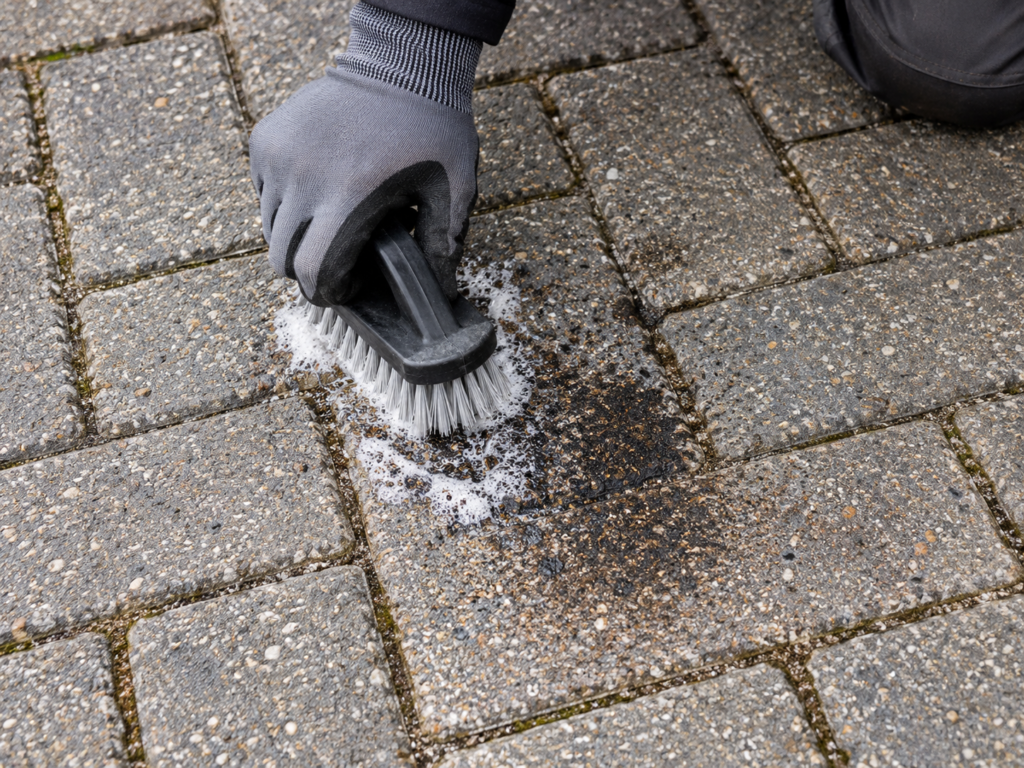
Where the product instructions allow it, work the treatment into the affected area with a suitable nylon brush.
Avoid grinding abrasive materials into the concrete or using a wire brush that could mark the finish.
Remove residue and reassess when dry
Collect the contaminated cleaning liquid and rinse only as directed, with runoff controlled.
Wet concrete naturally looks darker, so allow it to dry before deciding whether another treatment is justified.
For deeply absorbed oil, a specialist concrete stain treatment may be more appropriate than repeatedly washing the surface. Some residual shading may remain.
How to Remove Oil Stains from Block Paving
Before choosing a product, establish whether the blocks are concrete, clay or natural stone. Similar-looking driveways can need different treatments.
For concrete block paving, a typical approach is:
- Absorb any fresh liquid.
- Remove the used absorbent.
- Test a compatible oil-stain remover.
- Apply the treatment as instructed.
- Gently agitate where required.
- Collect residue and carry out a controlled rinse.
- Inspect the paving once dry.
Pay attention to the joints
Oil can collect in jointing material as well as on the blocks themselves.
Cleaning may disturb sand, especially if pressure washing is involved. Conventional sand-jointed paving may need suitable replacement sand once fully dry.
Permeable block paving uses a different jointing arrangement and should not automatically be filled with ordinary kiln-dried sand. The installed system determines the correct material.
Can stained blocks be replaced?
Replacing a small number of heavily stained blocks may be an option when repeated treatment provides little improvement.
However, new blocks can differ in colour from weathered paving. If oil has reached the bedding beneath them, simply replacing the visible blocks may not address all the contamination.
For wider cleaning and suitable re-sanding, see our driveway cleaning services.
How to Remove Oil from a Tarmac Driveway
Tarmac and asphalt need particular care because petroleum contamination can soften the bituminous binder.
Check for damage before scrubbing or pressure washing.
If the surface is soft, sticky, breaking apart or losing aggregate, further aggressive cleaning may make it worse. A surfacing contractor may need to assess whether the affected area requires repair.
For a small spill on otherwise sound surfacing:
- Absorb the oil promptly.
- Use only a cleaner confirmed as suitable for asphalt.
- Follow the surfacing supplier’s maintenance advice.
- Avoid solvents and aggressive abrasion.
- Stop if the surface begins to deteriorate.
Do not use petrol, diesel or paint thinner to dissolve an oil stain. These can introduce further contamination and damage.
A darker patch may remain even after the removable oil has been addressed. Where the binder has been damaged, cleaning alone is not a repair.
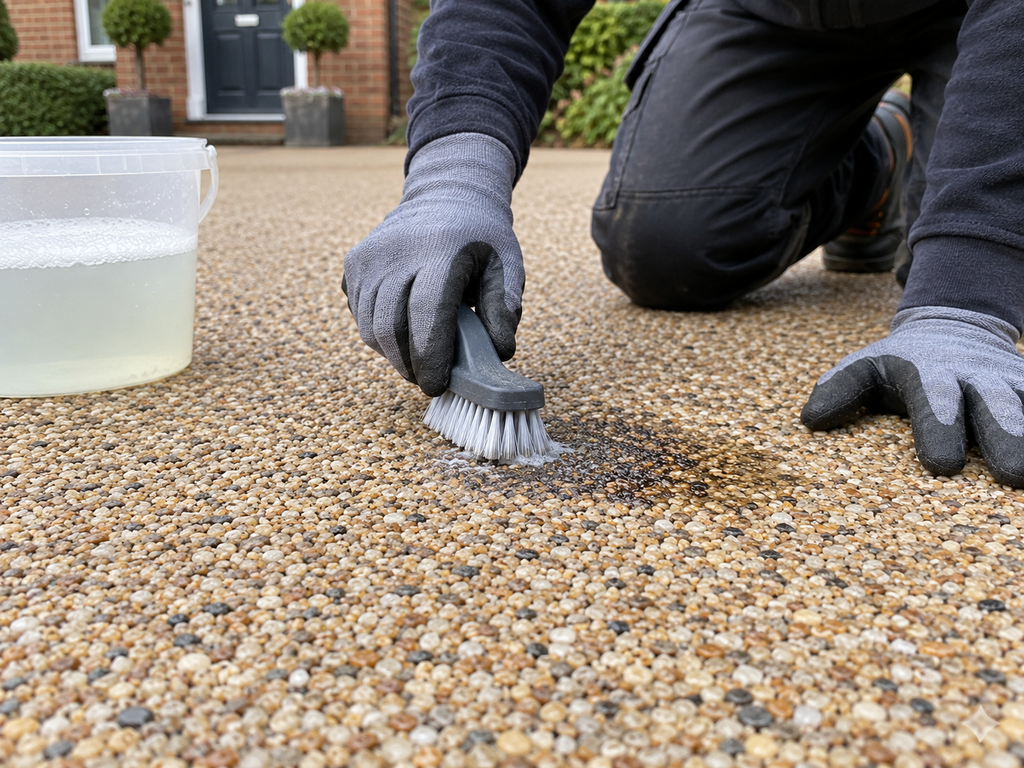
How to Remove Oil Stains from a Resin-Bound Driveway
Resin-bound surfacing consists of aggregate held together by a resin binder. Its cleaning requirements depend on the installed system.
Begin by checking the installer’s or manufacturer’s aftercare guidance.
For a minor spill:
- Absorb the free oil.
- Collect the contaminated material.
- Test an approved mild detergent or resin-compatible cleaner.
- Work gently with a suitable brush if instructed.
- Remove the cleaning residue without spreading it into surrounding areas.
Avoid assuming that a heavy-duty concrete degreaser is safe for resin. Compatibility must cover the binder as well as the aggregate.
Be careful with pressure and heat
Do not apply a universal pressure setting or use very hot water without checking the system’s guidance.
Loose stones, cracks or an ageing surface should be assessed before machine cleaning.
A permeable driveway also requires care with liquid contamination. Its ability to let rainwater through does not make it an appropriate place to wash oil into the ground.
How to Remove Oil Stains from Natural Stone
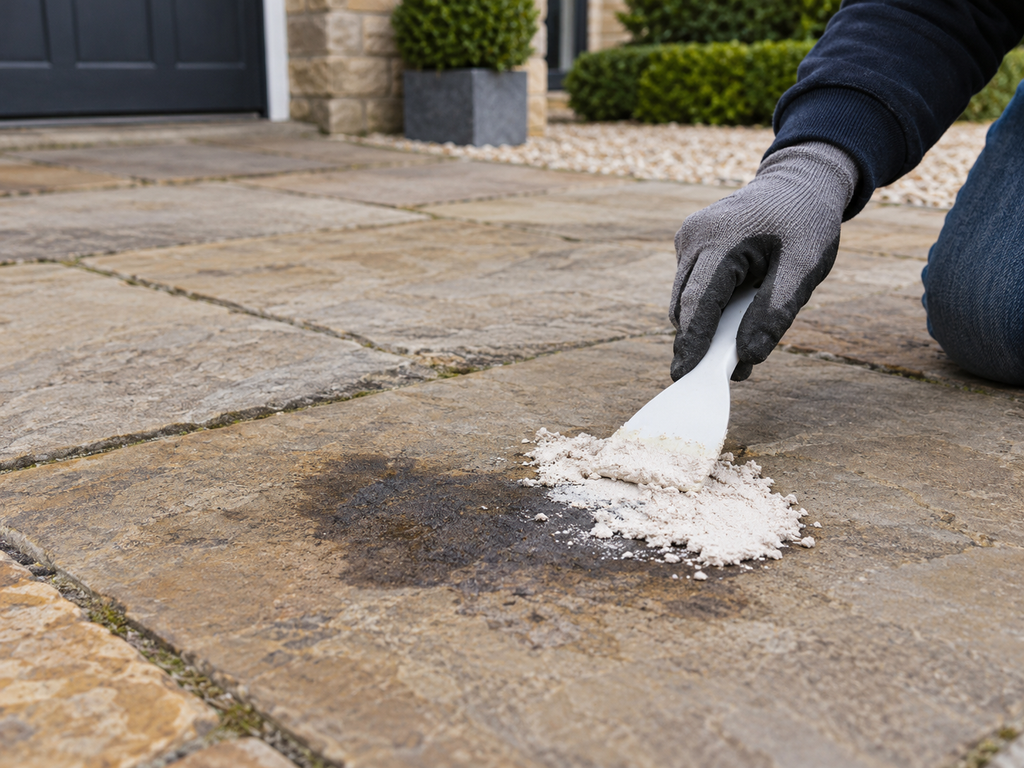
Natural stone requires identification before treatment. Limestone, sandstone, granite and other materials differ in their sensitivity and absorbency.
Use a stone-approved product
Choose an oil-stain treatment labelled as suitable for the specific stone and any applied sealer.
Avoid acidic household treatments such as vinegar on acid-sensitive stone. A product that removes a mark but etches the surface has created a new problem.
Consider specialist treatment for absorbed oil
Some stone-compatible products use a poultice approach to draw contamination towards an absorbent layer.
These are specialist treatments with their own application and removal instructions. Results depend on the stone, the depth of contamination and any previous cleaning attempts.
Do not improvise a mixture of solvents and household powders.
Accept that complete removal may be difficult
Deep oil staining can be particularly persistent in natural stone. Treatment may reduce the mark, but some cases require advice from a stone specialist or consideration of replacement.
What About Porcelain and Gravel Driveways?
Porcelain paving
Porcelain generally absorbs less liquid than many traditional paving materials, but oil can still leave residue on the surface or lodge in textured areas.
Use a porcelain-compatible detergent or degreaser and a non-scratching brush. Check the joints separately, as grout and jointing compounds may have different cleaning requirements.
Low absorbency does not mean every chemical is suitable.
Loose gravel
For a small spill, remove oil-contaminated gravel rather than hosing it down.
If oil has travelled into the soil or the spill is substantial, seek specialist advice. Adding clean gravel over the top hides the stain without removing the contamination.
Do Household Oil-Stain Remedies Work?
Some household products may help with a small, fresh mark, but they are less predictable than a treatment designed for the surface.
Washing-up liquid
A mild detergent may help lift a light surface film where the material’s maintenance guidance allows it.
It is less likely to remove an established stain from deep within porous paving. Excessive detergent also creates more contaminated wash water to manage.
Cat litter
Some absorbent mineral products may collect fresh liquid, but cat litter varies considerably. Clumping products can become difficult to remove when wet.
A purpose-made oil absorbent is a more predictable choice.
Baking soda
It may absorb a little fresh residue, but it should not be expected to extract deeply absorbed engine oil.
Vinegar
Vinegar is not a suitable general-purpose oil treatment and can damage acid-sensitive materials.
Bleach
Bleach is not an appropriate first choice for engine-oil removal. It does not solve the problem of oil held within porous paving and may affect finishes or nearby planting.
Solvents and fuel
Petrol, diesel and paint thinners should not be used as driveway cleaners. They can spread the contamination and damage some surfaces.
Never mix cleaning products. If a previous treatment has been used, tell the next person working on the stain what it was.
Will Pressure Washing Remove Oil Stains?
Pressure washing can help remove loosened contamination from a suitable surface, but it is not a reliable stand-alone solution for deeply absorbed oil.
A successful approach may involve a compatible pre-treatment, controlled agitation and careful removal of the resulting residue.
Using more pressure can:
- Remove jointing material.
- Mark or erode a vulnerable finish.
- Damage deteriorating tarmac.
- Disturb loose resin-bound aggregate.
- Spread oily water over a larger area.
The right method depends on the surface and its condition.
Where the same paving continues into an adjacent outdoor area, it may be helpful to assess the wider surface through our patio cleaning services, while treating the oil contamination as a separate issue.
How Should Oily Runoff Be Managed?
Oil removal does not end when the driveway looks cleaner.
Oil, contaminated absorbents and cleaning water should not be pushed into a road drain, surface-water drain, watercourse or neighbouring garden.
Before using liquid treatment, consider:
- Where the driveway slopes.
- Which drains are nearby.
- Whether the surface is permeable.
- How contaminated liquid will be collected.
- How the collected waste will be disposed of.
Follow local waste-disposal guidance for oily materials. Do not assume they belong in ordinary household rubbish.
For a large spill, a continuing leak or contamination approaching a drain or watercourse, seek specialist help rather than attempting to wash it away.
Why Does an Oil Stain Sometimes Reappear?
A mark can look improved while the driveway is wet, then become visible again as it dries.
Possible reasons include:
- Oil remains beneath the surface.
- Residue was not fully removed.
- Only the top layer of contamination was treated.
- The vehicle is still leaking.
- The stain has affected a sealer or the surface itself.
Let the area dry before assessing it. If another treatment is appropriate, follow the product’s instructions rather than immediately adding a stronger chemical.
When Should You Call a Professional?
Professional assessment is particularly useful when:
- The stain is old, extensive or repeatedly replenished.
- You cannot identify the driveway material.
- The surface is sealed or decorative.
- Natural stone or resin has already reacted to a cleaner.
- Tarmac appears soft or damaged.
- Runoff would be difficult to contain.
- Several DIY attempts have produced little improvement.
Explain what caused the stain, approximately how old it is and what products have already been applied.
A responsible assessment should distinguish between removable contamination, residual staining and damage that needs repair.
How Long Does Oil-Stain Removal Take?
The time depends on the material, treatment and depth of contamination.
A small fresh spill may need absorption and a limited cleaning treatment. An old stain may require repeat applications, a specialist product or a later inspection after drying.
There is no useful universal contact time. Follow the chosen product’s instructions, including its permitted weather conditions and drying requirements.
For planned maintenance, our guide to the best time of year for exterior cleaning explains the wider seasonal considerations. A fresh oil spill, however, should be contained promptly rather than left until a preferred cleaning season.
How to Prevent Further Oil Stains
The most effective prevention is to address the source.
- Have vehicle leaks investigated.
- Use a suitable drip tray temporarily where needed.
- Protect the driveway during vehicle maintenance.
- Keep an appropriate absorbent available.
- Deal with fresh spills promptly.
- Inspect parking areas regularly.
A compatible sealer may reduce absorption on some paving, but it will not make the driveway oil-proof.
Do not seal over an untreated stain. Existing contamination can interfere with the finish, and trapped staining may remain visible.
Frequently Asked Questions
Can old oil stains be completely removed?
Sometimes, but complete removal cannot be guaranteed. The result depends on the surface, the age of the stain and how deeply the oil has penetrated.
What is the best oil-stain remover for concrete?
Choose a product specifically approved for oil on concrete and suitable for the driveway’s finish or sealer. There is no single product that suits every concrete surface.
Can I use boiling water?
Boiling water is not a universal solution. It creates a scalding risk, can affect some materials and does not eliminate the need to collect contaminated runoff. Follow the cleaner’s stated temperature guidance.
Will rain wash the oil away?
Rain is not a dependable treatment for an established stain. It may also carry fresh oil towards drains or surrounding ground.
Is engine oil harmful to tarmac?
It can be. Petroleum contamination can soften the binder, so damaged areas may need repair rather than further cleaning.
Can I pressure wash immediately after applying a degreaser?
Follow the product’s instructions. It may require a specific contact time and removal method. The driveway must also be suitable for pressure washing, with runoff controlled.
Should I re-sand block paving after treatment?
Only where the jointing material has been removed or needs replacing. The correct replacement depends on the paving system, and the surface must be suitably dry before conventional re-sanding.
Can professional cleaning leave a faint mark?
Yes. A faint shadow can remain after removable oil has been addressed, especially on porous paving. More aggressive treatment may not be justified if it risks damaging the surface.
Get Advice on an Oil-Stained Driveway
An oil stain needs a treatment that suits the material beneath it. Concrete, block paving, tarmac, resin and natural stone should each be assessed on their own terms.
Thames Face Clean provides driveway cleaning across West and South West London, including Twickenham, Richmond, Teddington, Hampton and Kingston.
For an initial assessment, send clear photographs of the whole driveway and a close-up of the stain, together with your postcode. If possible, include the driveway material, the approximate age of the mark and details of any products already used.
This helps us advise on a suitable cleaning approach and explain what improvement can reasonably be expected.