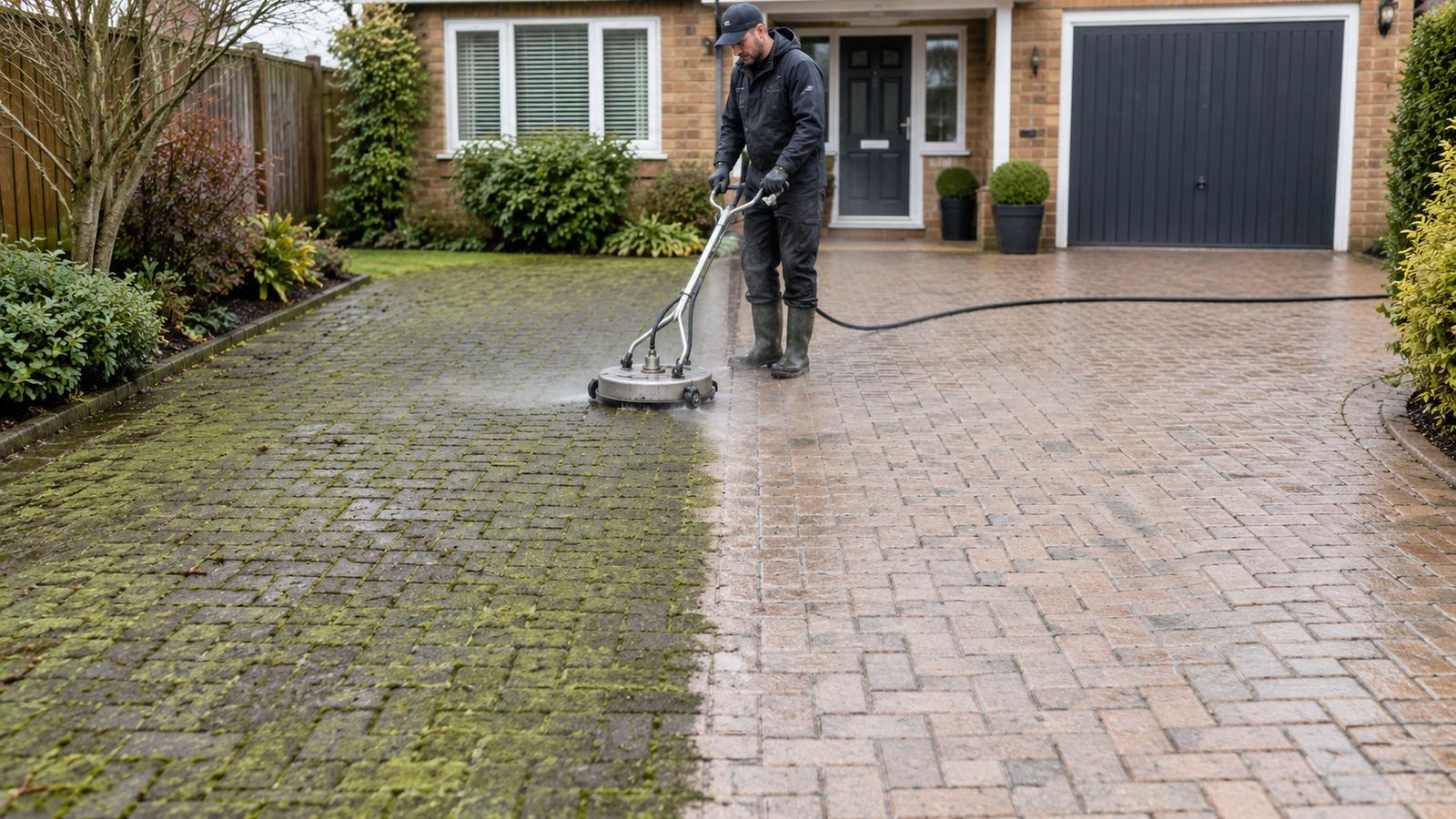
Why Is My Driveway Turning Green?
Have you noticed your driveway gradually developing green patches, a slippery film or a dull, dirty appearance?
You are not alone. Green driveways are a common problem for homeowners across London, particularly after periods of wet weather. In most cases, the green colour is caused by algae, moss or other organic growth that thrives when a driveway stays damp for long periods.
Although a green driveway may initially look like a cosmetic problem, algae and moss can make hard surfaces slippery, particularly after rain. They can also make an otherwise well-maintained property look neglected.
The good news is that professional green driveway cleaning can remove existing organic growth and restore the appearance of your paving, while the right maintenance approach can help slow down regrowth.
At Thames Face Clean, we provide professional driveway cleaning and exterior cleaning services across West and South West London, including Twickenham, Richmond, Teddington, Hampton and Kingston.
Want to get your driveway looking clean and presentable again? Contact Thames Face Clean for a free, no-obligation quotation.
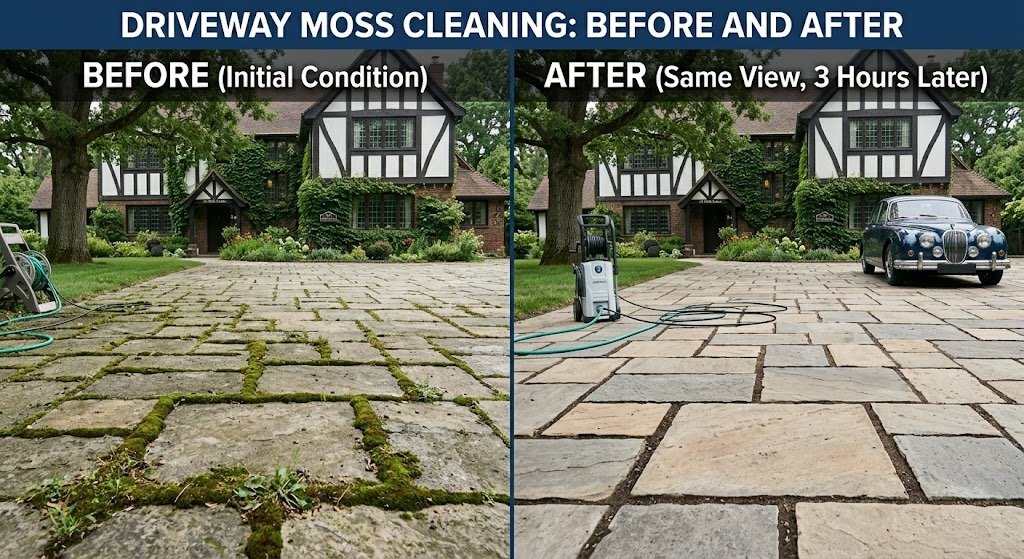
What Causes a Driveway to Turn Green?
The green appearance is usually caused by biological growth, particularly algae. Moss and lichen can also contribute to discolouration.
Algae, moss and similar organisms thrive when they have access to moisture and suitable conditions for growth. The RHS notes that algae commonly forms a green film on hard surfaces such as paving, concrete and other outdoor areas, with growth often increasing in wet and shaded locations.
Several factors can make your driveway more likely to turn green.
1. Excess Moisture
Moisture is one of the biggest reasons algae grows on driveways.
During periods of frequent rain, a driveway may remain damp for hours or even days. If water does not drain away efficiently, the surface provides an ideal environment for organic growth.
Low spots, blocked drainage channels and areas where water regularly pools can make the problem worse.
2. Lack of Direct Sunlight
Is your driveway shaded by trees, hedges, fences or neighbouring buildings?
A shaded driveway generally dries more slowly than a surface exposed to direct sunlight. Less sunlight combined with poor airflow can create the damp conditions algae needs to spread.
This is one reason north-facing or heavily shaded driveways can be particularly vulnerable.
3. Poor Drainage
If rainwater remains on your driveway rather than draining away, green growth can become a recurring problem.
Poor drainage may be caused by:
- Uneven surfaces
- Blocked drains
- Low points in the driveway
- Nearby soil or landscaping
- Poorly designed drainage
- Water runoff from roofs or gardens
Cleaning the visible algae may improve the appearance, but if standing water remains, the conditions that caused the problem have not been removed.
4. Leaves and Organic Debris
Leaves, soil, pollen, grass cuttings and other organic material can accumulate on driveways.
This debris can retain moisture and provide additional material for algae and moss to establish.
Regular sweeping and keeping drainage points clear can help reduce the conditions that encourage organic growth.
5. Porous Driveway Materials
Some driveway materials are more susceptible to retaining moisture than others.
Block paving, concrete and natural stone can have textured or porous surfaces where dirt and moisture accumulate. The joints between paving blocks can also collect soil and organic debris.
This does not mean these materials are unsuitable for driveways. It simply means they may require appropriate cleaning and maintenance.
Is Green Algae on a Driveway a Problem?
A green driveway is not necessarily a sign that the paving itself is being damaged.
However, algae and moss can create a practical problem: slipperiness.
The RHS specifically warns that algae, moss and similar growths can make hard surfaces slippery, particularly in areas used for walking.
This is particularly important around:
- Driveways
- Paths
- Steps
- Walkways
- Patio entrances
- Areas around garages
- Access routes to front doors
A driveway that looks only slightly green when dry may become considerably more slippery when wet.
For this reason, driveway algae removal is not simply about improving kerb appeal. It can also be part of sensible property maintenance.
Why Does My Driveway Keep Turning Green After Cleaning?
This is one of the most common questions homeowners ask.
You may have pressure washed your driveway, removed the visible green staining and been pleased with the result — only to see the green colour return later.
Why?
Because cleaning the visible surface does not necessarily eliminate the conditions that encourage organic growth.
If your driveway remains:
- Damp
- Shaded
- Poorly ventilated
- Covered by leaves
- Poorly drained
then algae can return.
Professional exterior cleaners therefore need to consider both surface cleaning and the cause of recurring growth.
The RHS also points out that algae and moss can return when the environmental conditions that support them remain unchanged.
Can Pressure Washing Remove Green Algae?
Yes, pressure washing can be highly effective for removing visible algae, dirt and organic build-up from suitable driveway surfaces.
However, pressure washing should not automatically mean using maximum pressure.
Different driveway materials require different cleaning approaches.
For example, block paving, concrete, natural stone and other surfaces can respond differently to aggressive pressure. Excessive pressure may potentially damage surfaces, disturb jointing material or create unnecessary wear.
Professional driveway cleaning should therefore begin with an assessment of:
- The driveway material
- Surface condition
- Existing damage
- Joint condition
- Drainage
- Level of algae and moss
- Surrounding plants and landscaping
The RHS recommends pressure washing as one method for removing growths from hard surfaces, while also advising care where drainage is poor.
Pressure Washing vs Professional Algae Removal
A standard pressure washer can remove a large amount of visible dirt and organic growth.
But professional cleaning is about more than simply pointing a pressure washer at the driveway.
A professional approach may involve:
Step 1: Surface Assessment
The driveway is inspected to identify its material, condition and the type of contamination present.
Step 2: Removal of Loose Debris
Leaves, soil, weeds and loose organic material are cleared before the main cleaning process.
Step 3: Appropriate Cleaning Treatment
Depending on the surface and contamination, a suitable cleaning method can be selected.
Step 4: Controlled Pressure Cleaning
Professional equipment can then be used at an appropriate pressure to remove algae, dirt and other surface contamination.
Step 5: Final Inspection
The driveway is checked after cleaning to identify any areas that require additional attention.
Step 6: Maintenance Advice
The homeowner can then receive advice about drainage, shade, debris and ongoing maintenance.
The exact process should always be adapted to the driveway rather than applying the same pressure and treatment to every surface.
What Is the Best Way to Remove Algae from a Driveway?
There is no single cleaning method that is perfect for every driveway.
The best solution depends on the surface and the severity of the growth.
Block Paving
Block paving can collect dirt and organic debris in the joints between individual blocks.
Professional cleaning can remove surface contamination, while care should be taken around the joints to avoid unnecessary displacement of jointing material.
Concrete Driveways
Concrete can develop green algae, dirt and weather-related staining.
Suitable pressure cleaning can significantly improve its appearance, although heavily weathered or stained concrete may require additional treatment.
Natural Stone
Natural stone requires particular care because different stones have different characteristics.
A professional should assess the stone before deciding on pressure levels and cleaning methods.
Tarmac
Tarmac can also develop algae, moss and general dirt, especially when exposed to persistent moisture and shade.
Cleaning should be carried out using a method appropriate for the condition of the surface.
Why You Shouldn’t Always Use Maximum Pressure
It can be tempting to assume that more pressure means a cleaner driveway.
That is not necessarily true.
Using excessive pressure can cause problems, particularly on delicate or damaged surfaces.
Potential issues include:
- Damage to the surface
- Displacement of jointing material
- Surface erosion
- Damage to existing cracks
- Water being forced into unwanted areas
- Damage to surrounding plants
The objective of professional driveway cleaning is not simply to use the strongest possible pressure. It is to achieve an effective clean while protecting the surface.
This is why a professional assessment is important before cleaning begins.
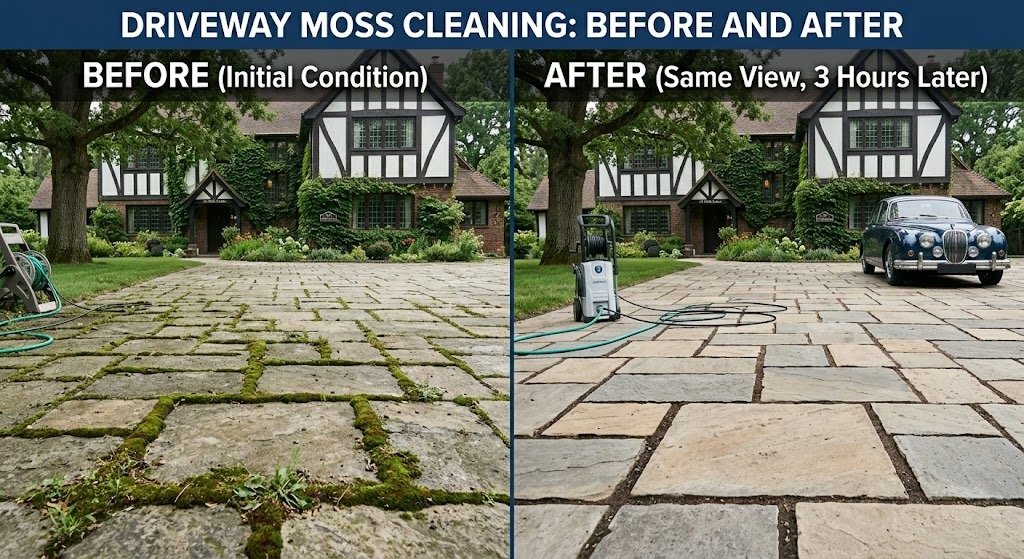
How to Prevent Your Driveway from Turning Green Again
Once your driveway has been cleaned, a few simple maintenance steps can help reduce the chance of rapid regrowth.
Keep the Driveway Clear of Leaves
Sweep away leaves, grass cuttings and other organic debris regularly.
This is particularly important during autumn and periods of heavy rainfall.
Improve Drainage
Check whether water is pooling in particular areas.
Keep nearby drains and drainage channels clear so that rainwater can leave the surface efficiently.
Reduce Excessive Shade
If possible, trim overhanging vegetation that keeps the driveway permanently shaded.
More sunlight and better airflow can help the surface dry more quickly.
Clean Small Areas Early
Do not wait until the entire driveway has become heavily covered in green growth.
Early maintenance can make future cleaning easier.
Schedule Regular Exterior Cleaning
If your driveway is naturally damp or shaded, occasional professional cleaning may be more effective than waiting until the algae becomes severe.
How Often Should a Driveway Be Professionally Cleaned?
There is no universal schedule for every property.
A driveway in a sunny, well-drained location may stay clean considerably longer than one underneath trees or in a permanently shaded area.
Factors affecting cleaning frequency include:
- Amount of shade
- Drainage
- Driveway material
- Local weather conditions
- Nearby vegetation
- Amount of foot and vehicle traffic
- Previous maintenance
- Severity of algae growth
Instead of focusing solely on a fixed cleaning schedule, look for early signs of organic growth.
If you notice green patches beginning to appear, it may be time to arrange professional driveway algae removal.
DIY Driveway Algae Removal: Is It Worth It?
For a small area with light contamination, basic maintenance such as sweeping and brushing may help.
However, larger or heavily contaminated driveways can be much more difficult to clean effectively.
DIY pressure washing also carries risks if the wrong pressure, nozzle or technique is used.
You may end up with:
- Uneven cleaning
- Damaged surfaces
- Displaced jointing sand
- Water splashing onto walls or windows
- Damage to nearby plants
- Algae returning quickly
If you are unsure about the correct cleaning method for your driveway, professional assessment can be a safer option.
How Thames Face Clean Can Help
At Thames Face Clean, we provide professional exterior cleaning for residential and commercial properties across West and South West London.
Our driveway cleaning service is designed to remove common forms of outdoor contamination, including:
- Algae
- Moss
- Dirt
- Weeds
- Surface staining
- General organic build-up
We assess the surface before choosing the most appropriate cleaning approach rather than treating every driveway in exactly the same way.
Our existing service information highlights driveway cleaning for block paving, concrete and other hard surfaces, with professional equipment and surface assessment used to achieve an effective result while taking care of the property.
Driveway Cleaning Across West and South West London
Thames Face Clean serves homeowners and businesses in and around:
- Twickenham
- Richmond
- Teddington
- Hampton
- Kingston
- East Sheen
- Surrounding West London areas
If your driveway has started turning green, don’t wait until algae and moss cover the entire surface.
A professional clean can restore a cleaner appearance and help make your outdoor areas easier to maintain.
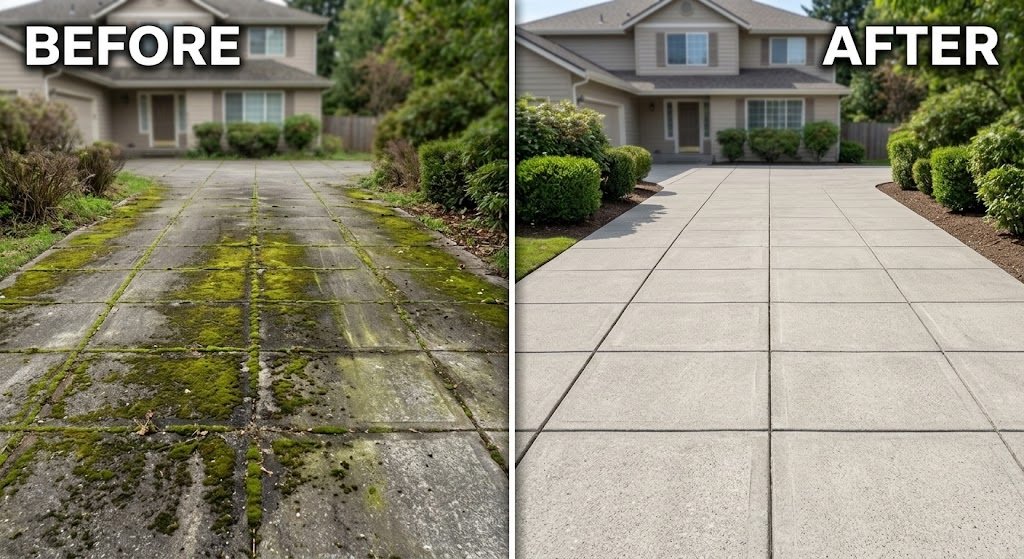
Green Driveway Cleaning: What You Should Remember
A green driveway is usually caused by algae, moss or other organic growth encouraged by moisture, shade, poor airflow and organic debris.
The key points are:
- Moisture encourages algae growth.
- Shaded driveways tend to stay damp for longer.
- Poor drainage can make recurring algae worse.
- Pressure washing can remove visible organic growth, but the correct method depends on the surface.
- Using excessive pressure can damage some driveway materials.
- Regular maintenance can help slow down regrowth.
- Professional driveway cleaning can provide a more thorough and controlled solution.
If your driveway is already green and slippery, professional cleaning may be the simplest way to restore its appearance.
Ready to Get Rid of the Green?
Don’t let a green, slippery driveway become a permanent feature of your property.
Thames Face Clean provides professional driveway cleaning and exterior cleaning services across West and South West London.
Whether your driveway is affected by algae, moss, dirt or general staining, we can assess the surface and recommend an appropriate cleaning solution.
Get Your Free Driveway Cleaning Quote
Contact Thames Face Clean today for a free, no-obligation quotation.
Tell us where you’re located, what type of driveway you have and what condition it is in. For many exterior cleaning jobs, clear photographs can also help with an initial estimate.
Ready for a cleaner driveway? Get in touch with Thames Face Clean today and let the professionals take care of the green.
Frequently Asked Questions
Why does my driveway turn green?
Driveways usually turn green because algae and other organic growths thrive in damp, shaded conditions. Poor drainage, limited sunlight, organic debris and porous surfaces can all encourage growth.
How do I remove green algae from my driveway?
Depending on the surface and severity of the growth, algae can be removed through appropriate brushing, cleaning treatments and pressure washing. The correct approach depends on the driveway material and condition.
Does pressure washing remove driveway algae?
Pressure washing can remove visible algae and organic build-up from suitable surfaces. However, the pressure and cleaning method should be selected according to the surface to reduce the risk of damage.
Why does algae keep coming back after pressure washing?
If the driveway remains damp, shaded or poorly drained, the conditions that encourage algae growth remain. This can allow green growth to return after cleaning.
Is green algae on a driveway dangerous?
Algae itself is not necessarily dangerous, but it can make outdoor hard surfaces slippery, particularly when wet. This can increase the risk of slips and falls.
Can you remove algae from block paving?
Yes. Block paving can be professionally cleaned to remove algae, moss, dirt and other organic contamination. The cleaning method should take the condition of the blocks and joints into account.
How can I stop my driveway turning green?
Regularly remove leaves and debris, keep drainage points clear, reduce excessive shade where possible and arrange professional cleaning when organic growth begins to build up.
Do you provide driveway cleaning in Richmond and Twickenham?
Yes. Thames Face Clean provides exterior cleaning services across West and South West London, including Richmond, Twickenham, Teddington, Hampton and Kingston.
Can I get a quote before booking?
Yes. Thames Face Clean offers free, no-obligation quotations, and clear photographs may be sufficient for an initial estimate for many exterior cleaning jobs.
Suggested SEO Metadata
SEO Title:
Why Is My Driveway Turning Green? | Algae Removal London
Meta Description:
Why is your driveway turning green? Learn what causes driveway algae, how professional green driveway cleaning works and how to prevent regrowth.
Suggested URL Slug:/why-is-my-driveway-turning-green/
Primary Keyword:green driveway cleaning
Secondary Keyword:driveway algae removal
Search Intent:
Informational + Commercial Investigation + Local Service
Suggested H1:
Why Is My Driveway Turning Green? Causes and Professional Cleaning Solutions
Suggested CTA:
Get a Free Driveway Cleaning Quote
Suggested Internal Links
For the final version on Thames Face Clean, I recommend internally linking naturally to:
- Driveway Cleaning
- Pressure Washing
- Patio Cleaning
- Exterior House Cleaning
- Commercial Exterior Cleaning
- Relevant local service pages for Richmond, Twickenham, Teddington and Kingston
This creates a stronger topical cluster around driveway cleaning rather than relying on this article alone.
No responses yet